Bigger words. Braver thinkers
Teaching first grade is about bridging kindergarten wonder with the growing independence of a real reader and writer. Every phonics lesson, shared story, and partner discussion becomes a chance to build confidence, clarity, and community. 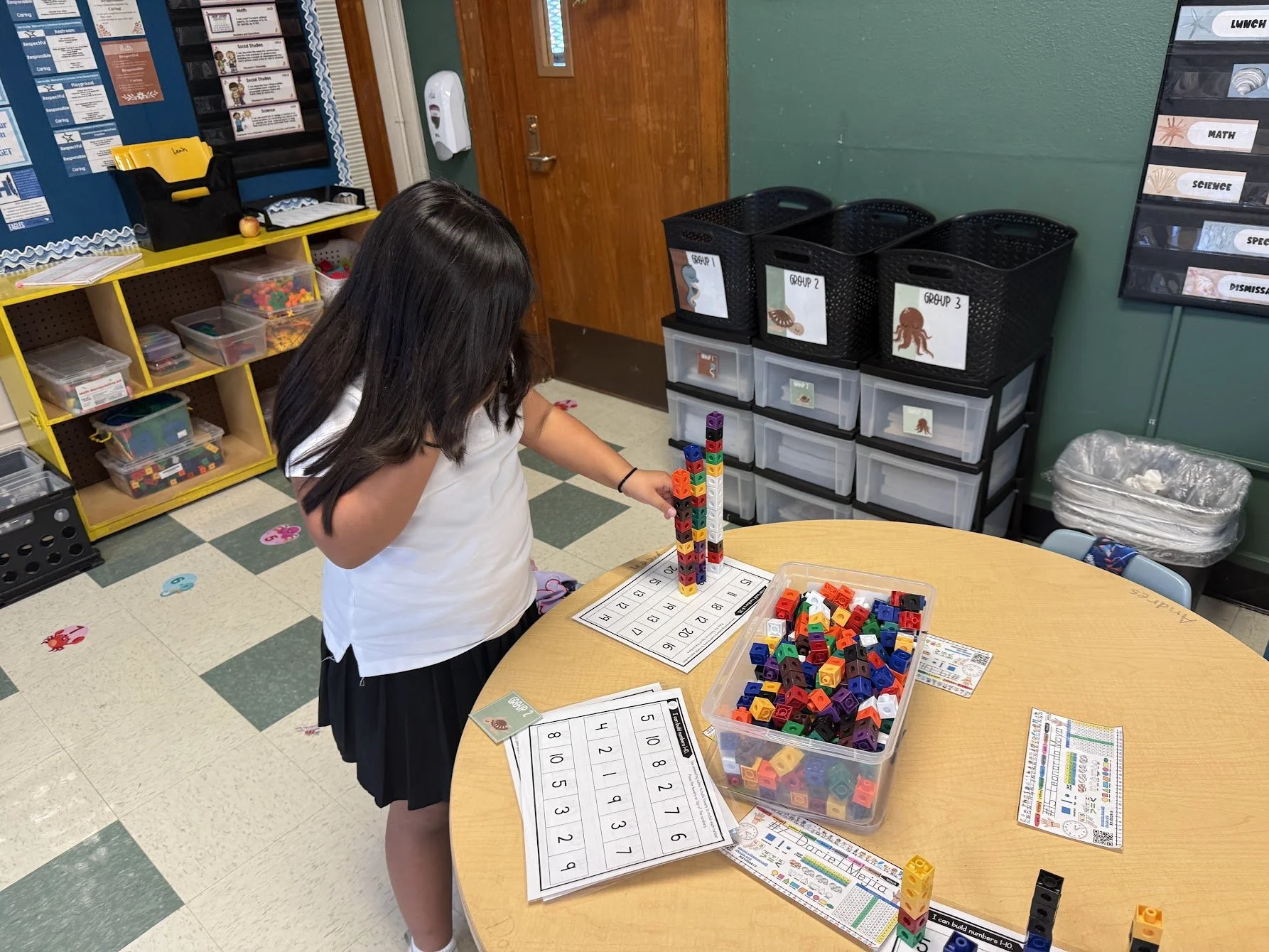
Math Centers
First grade math centers are rotating, hands-on stations where small groups of students practice different skills at once—one group might be solving story problems with dominoes, another building teen numbers with ten frames, another playing a partner game with dice, and another working with the teacher for targeted instruction. We do centers because first graders have short attention spans but huge energy for variety, and a well-designed center rotation ensures every child gets repeated, playful practice with number sense, addition, subtraction, and place value without anyone sitting still for too long.
Phonics Instruction
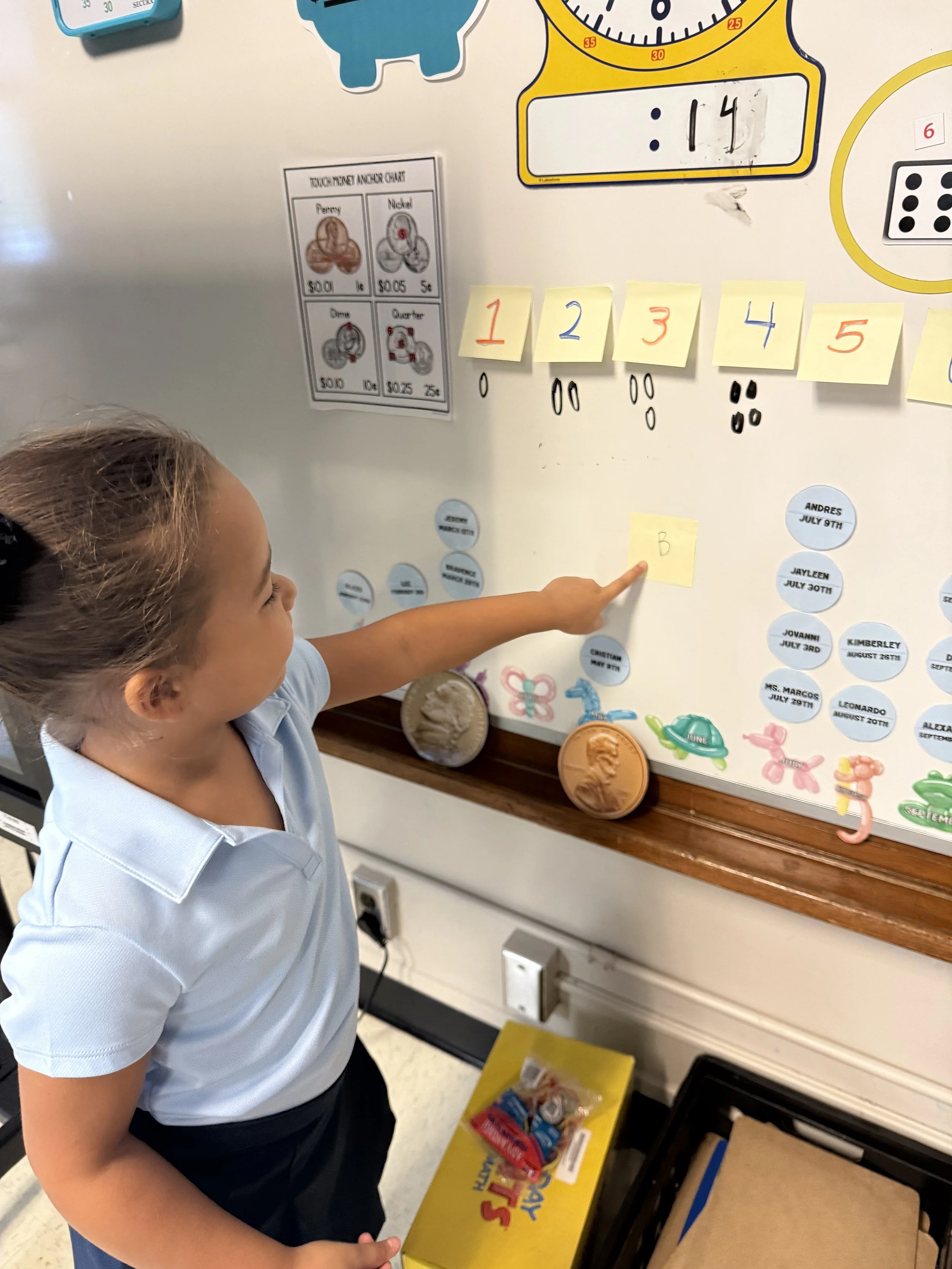
Systematic science of reading phonics instruction teaches letter sounds, blending, and decoding in a carefully sequenced order—starting with a few consonants and a short vowel, then gradually adding new patterns so no child is asked to read words before they have the tools to sound them out. We teach this way because cognitive science has shown that the human brain does not learn to read naturally, as it learns to speak; instead, young readers need explicit, logical, cumulative instruction that leaves no gaps or guesswork.
Immersive Learning
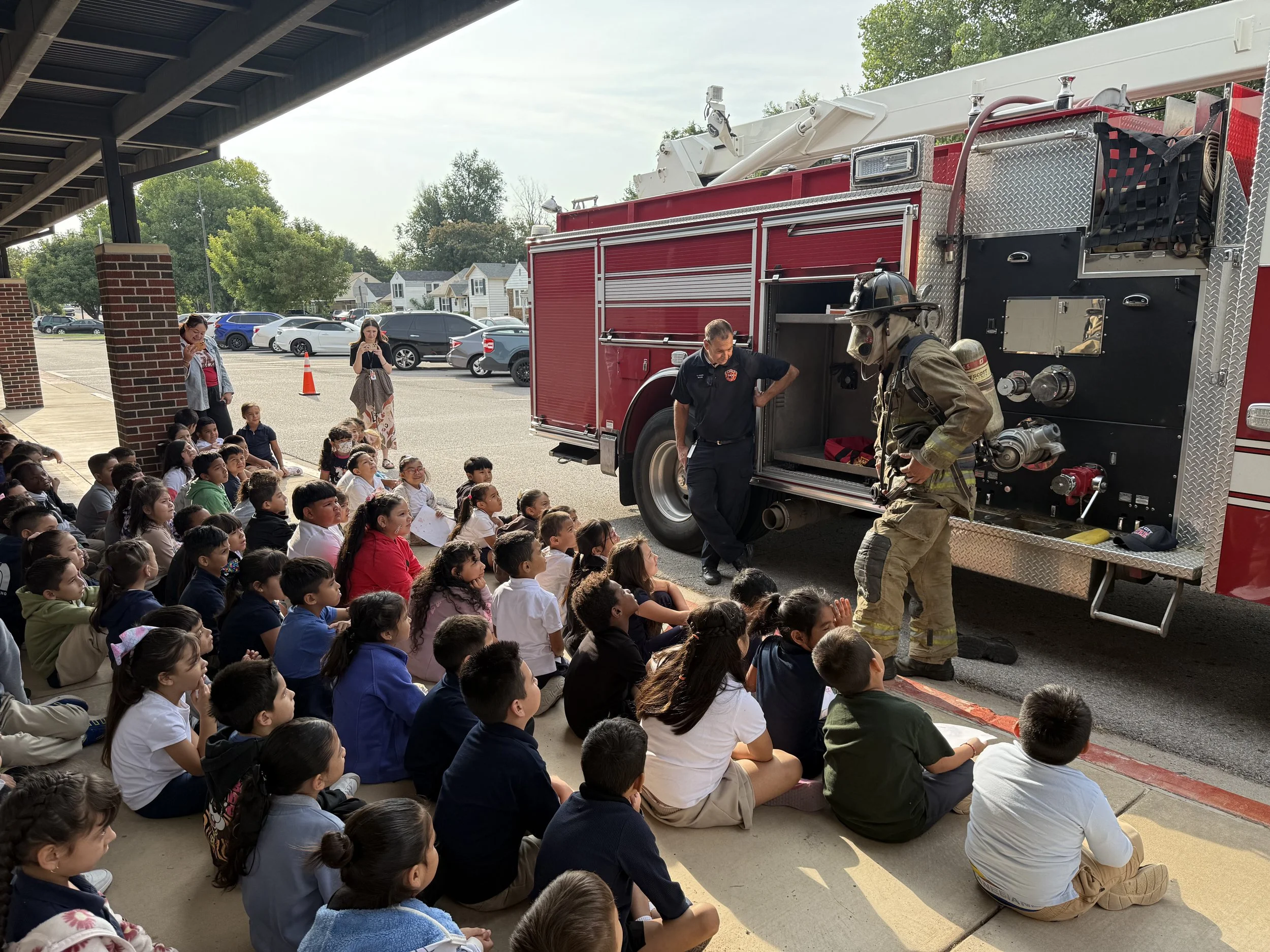
Immersive learning experiences for first graders—like meeting real firefighters in full gear or walking through a First Americans museum with life-sized canoes and tipis—turn abstract social studies concepts into lived, memorable moments that no worksheet could ever match. We do these experiences because first graders learn best by seeing, touching, asking questions, and making personal connections; a firefighter showing how an oxygen mask works makes "community helpers" real, and handling a replica grinding stone makes "how people lived long ago" feel tangible instead of distant.
Hands-On Math
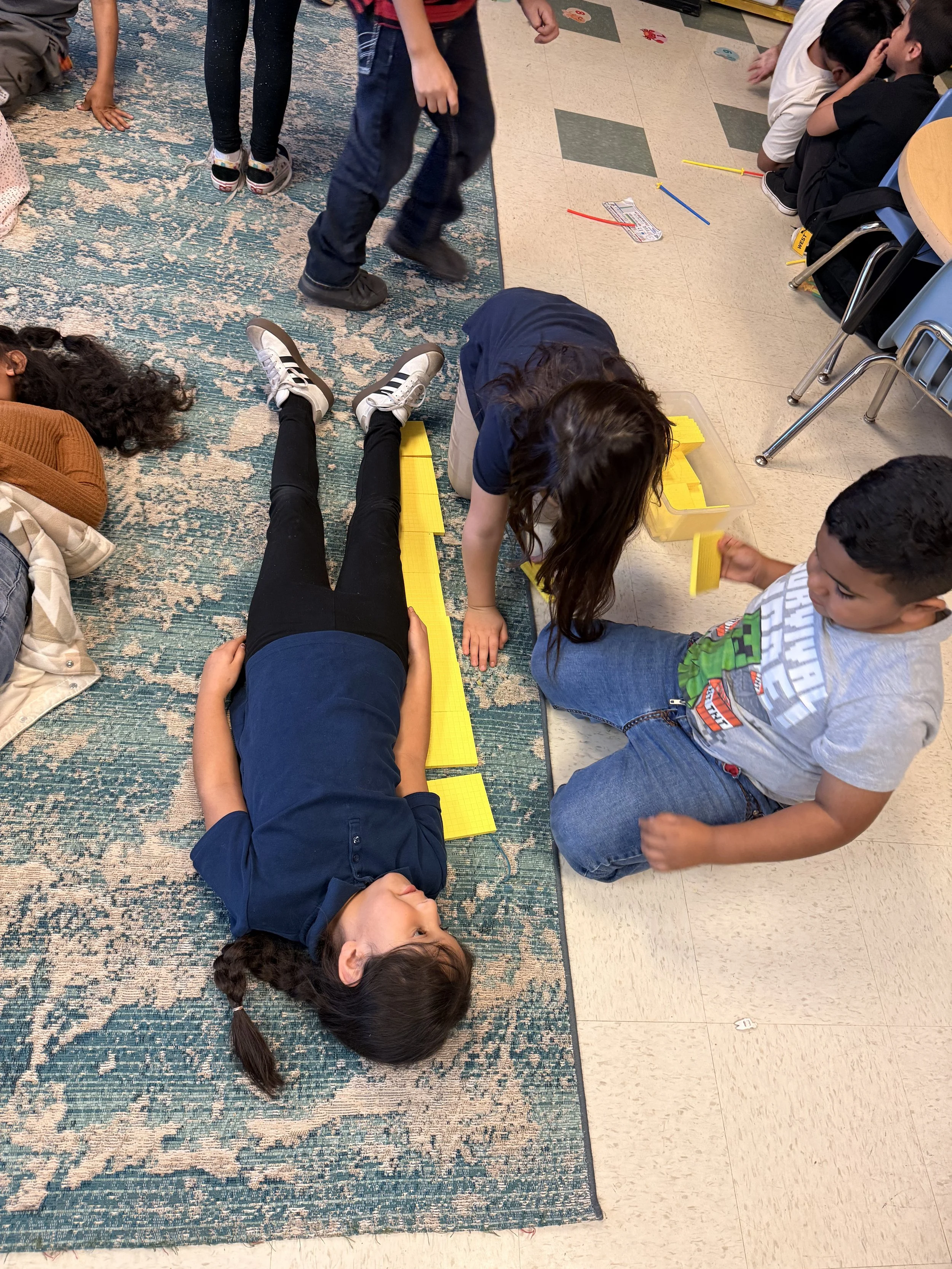
Hands-on math in first grade means trading pencils and worksheets for counting bears, number lines, base-ten blocks, play dough, and anything else little fingers can touch, move, and rearrange—so that a problem like "8 + 5" becomes a child physically snapping together two piles of cubes, then breaking one apart to make a ten. We teach this way because first graders are concrete thinkers; they cannot simply memorize abstract symbols, but when they see and feel a ten-frame filling up or a number bond cracking apart, the math lives inside their hands before it lives inside their heads.
Mapping Explore
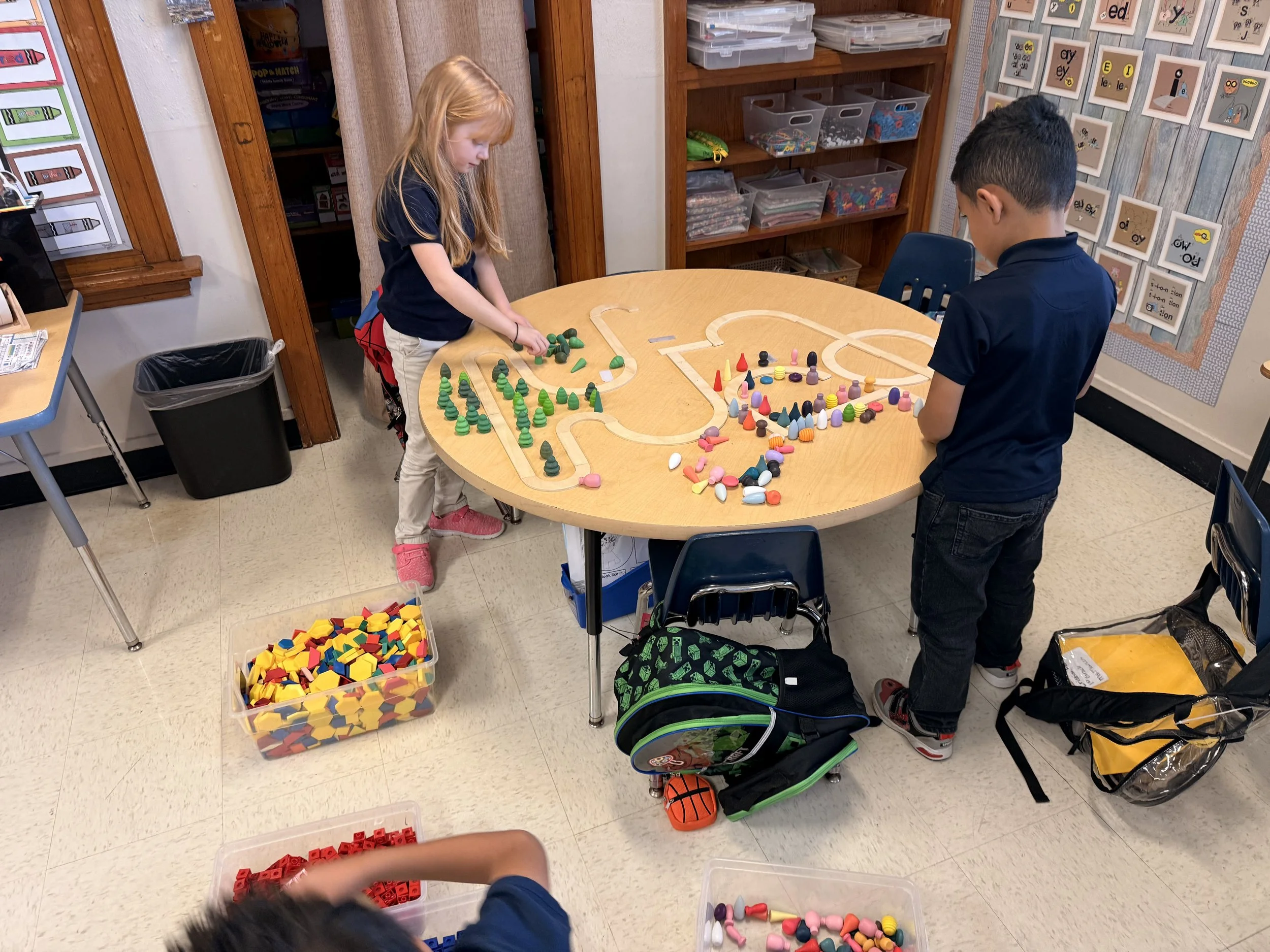
Creating maps in first grade starts with kids drawing their own classroom—"Here's my desk, here's the reading rug, here's where the hamsters sleep"—then expands to their bedroom, their school, and eventually a simple treasure map with an X marking the spot. We do this because mapmaking teaches spatial thinking, symbols, legends, cardinal directions, and perspective all at once, while also sneaking in narrative skills as children decide what's important enough to include and how to show it.
Writing
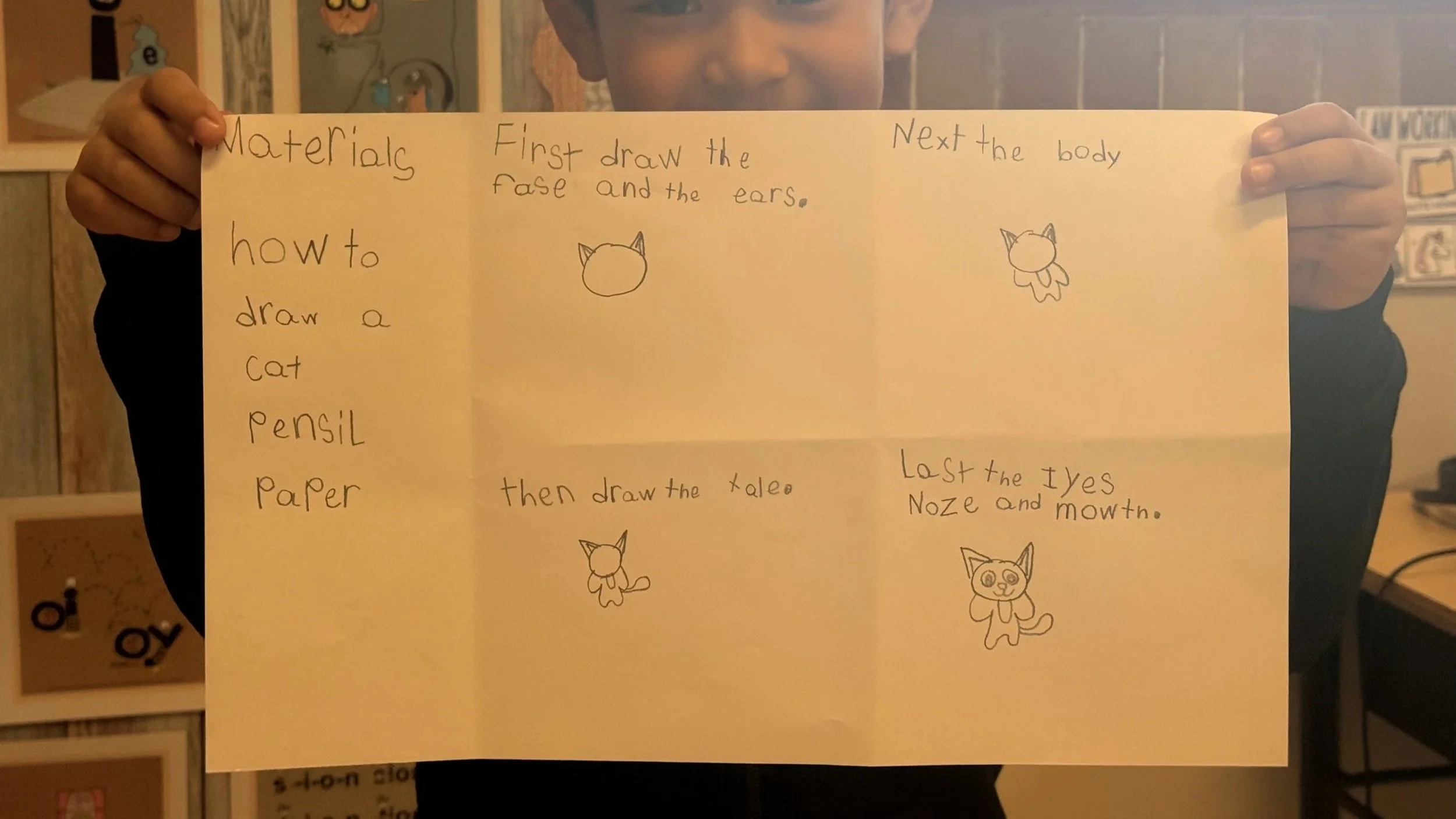
Writing time in first grade moves through four essential genres across the year—narrative (small moment stories about losing a tooth or a trip to the park), procedural (step‑by‑step instructions for how to make a peanut butter sandwich or build a block tower), opinion (persuasive letters convincing the principal to get a class pet), and informative (teaching others about butterflies, fire trucks, or their favorite animal). We teach all four because first graders need to understand that writing has different jobs—sometimes you tell a story, sometimes you give directions, sometimes you change someone's mind, and sometimes you share what you know—and switching genres builds flexible thinkers who can match their words to their purpose.