Big ideas. Bigger questions.
Teaching third grade is about the shift from learning to read to reading to learn—and all the curiosity that unlocks. Every research project, group discussion, and real-world problem becomes a doorway into deeper thinking and stronger collaboration.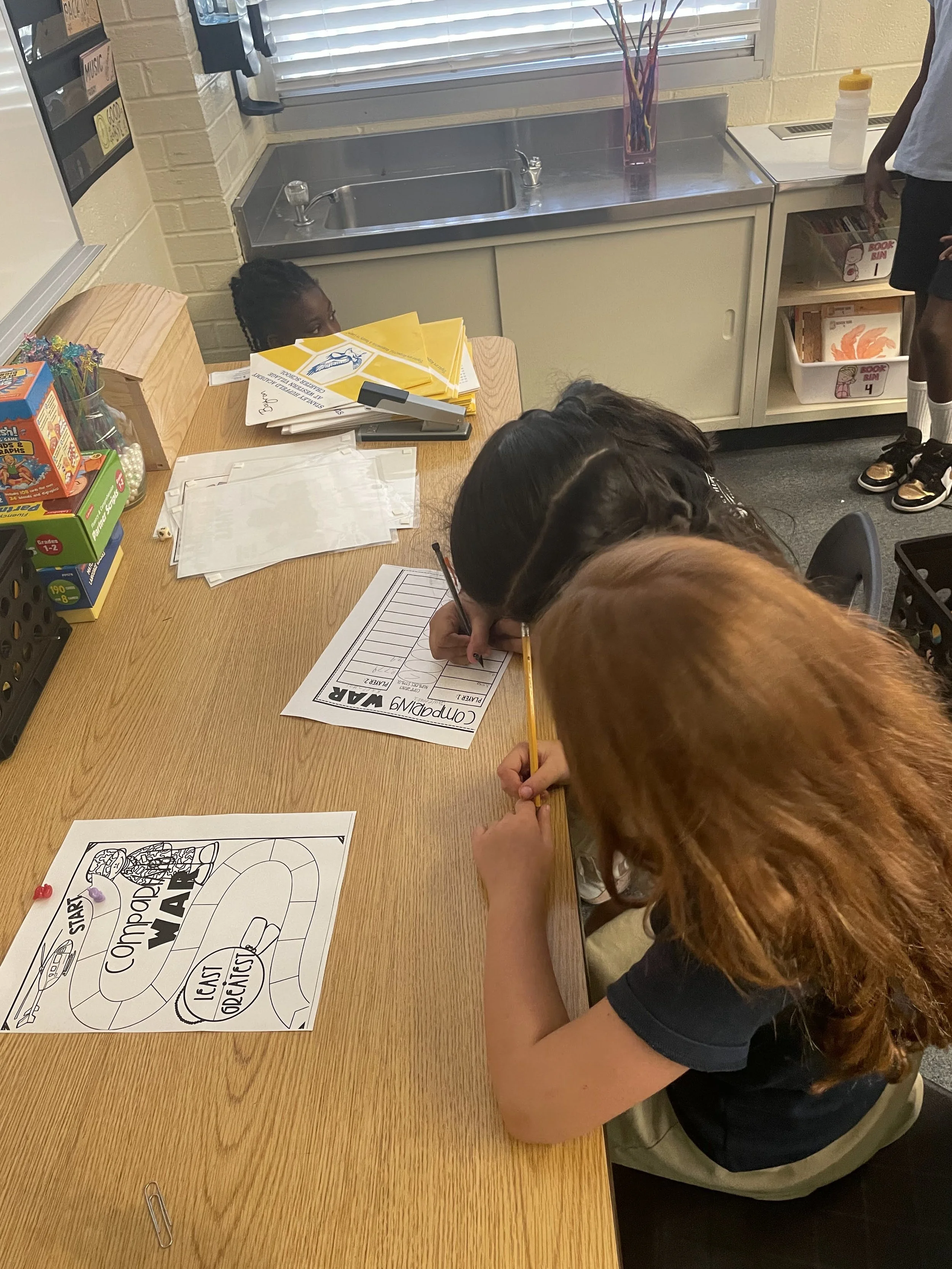
Math Games
Math games in third grade turn skills like multiplication facts, fractions, rounding, and area into friendly competition—whether it's a card game war for multiplication, a bingo board for equivalent fractions, or a dice race to claim the most space on a grid. We use games because third graders are developmentally ready for strategy and speed, but drill worksheets kill their curiosity; a well-designed game sneaks in thirty repetitions of "7 x 8" while kids are too busy laughing and trying to beat their partner to notice they're practicing.
Technology
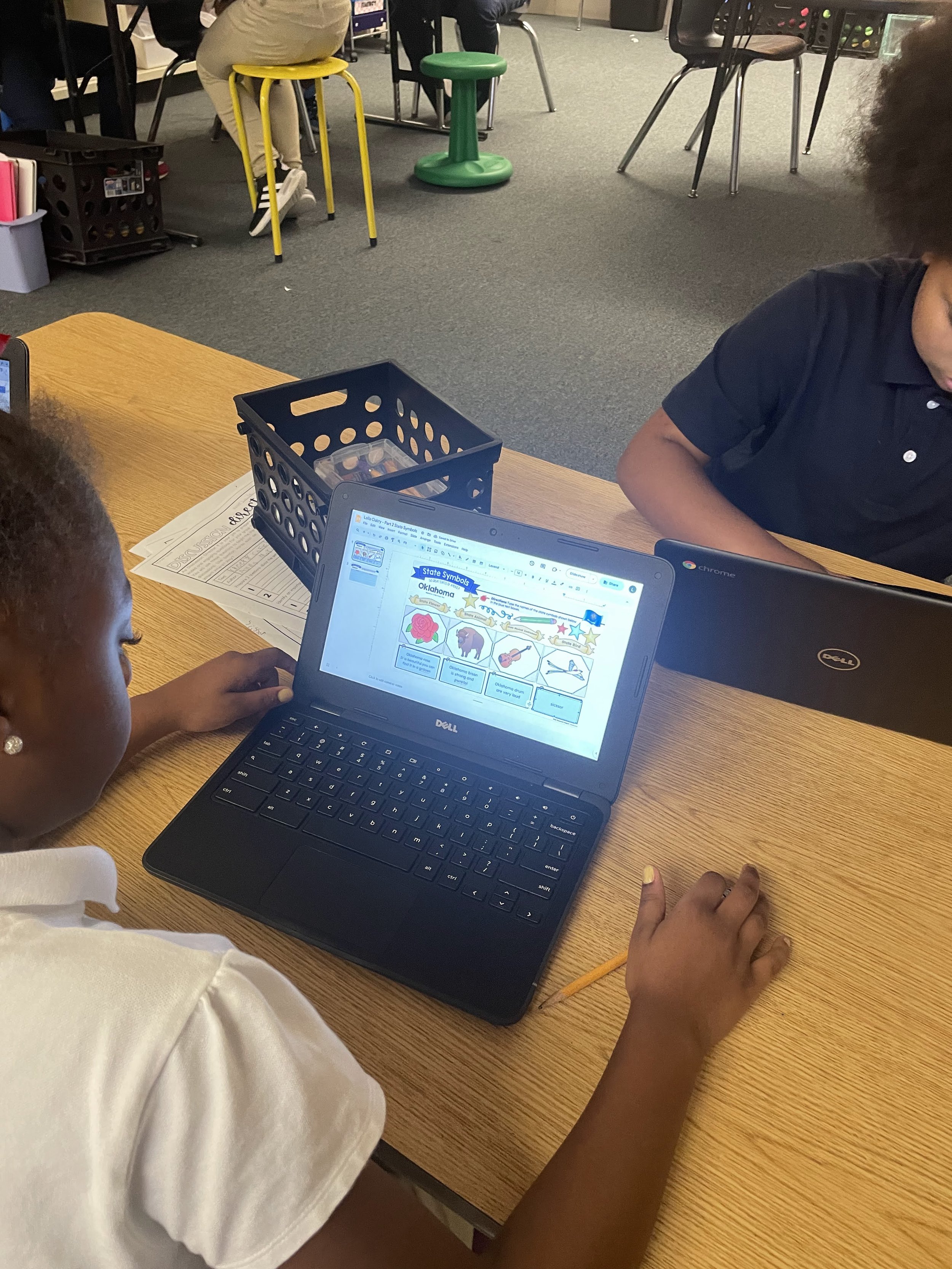
Third grade technology and research centers use classroom computers or tablets for activities like typing short research reports on animals or planets, practicing multiplication facts on digital game sites, navigating kid-friendly search engines to find answers to their own questions, and building slide presentations to share with the class. We structure centers this way because third graders are ready to move from "learning to read" to "reading to learn," and technology gives them the independence to explore topics they care about—whether it's great white sharks or the tallest mountains—while quietly building keyboarding, digital citizenship, and self-management skills.
Making a Map
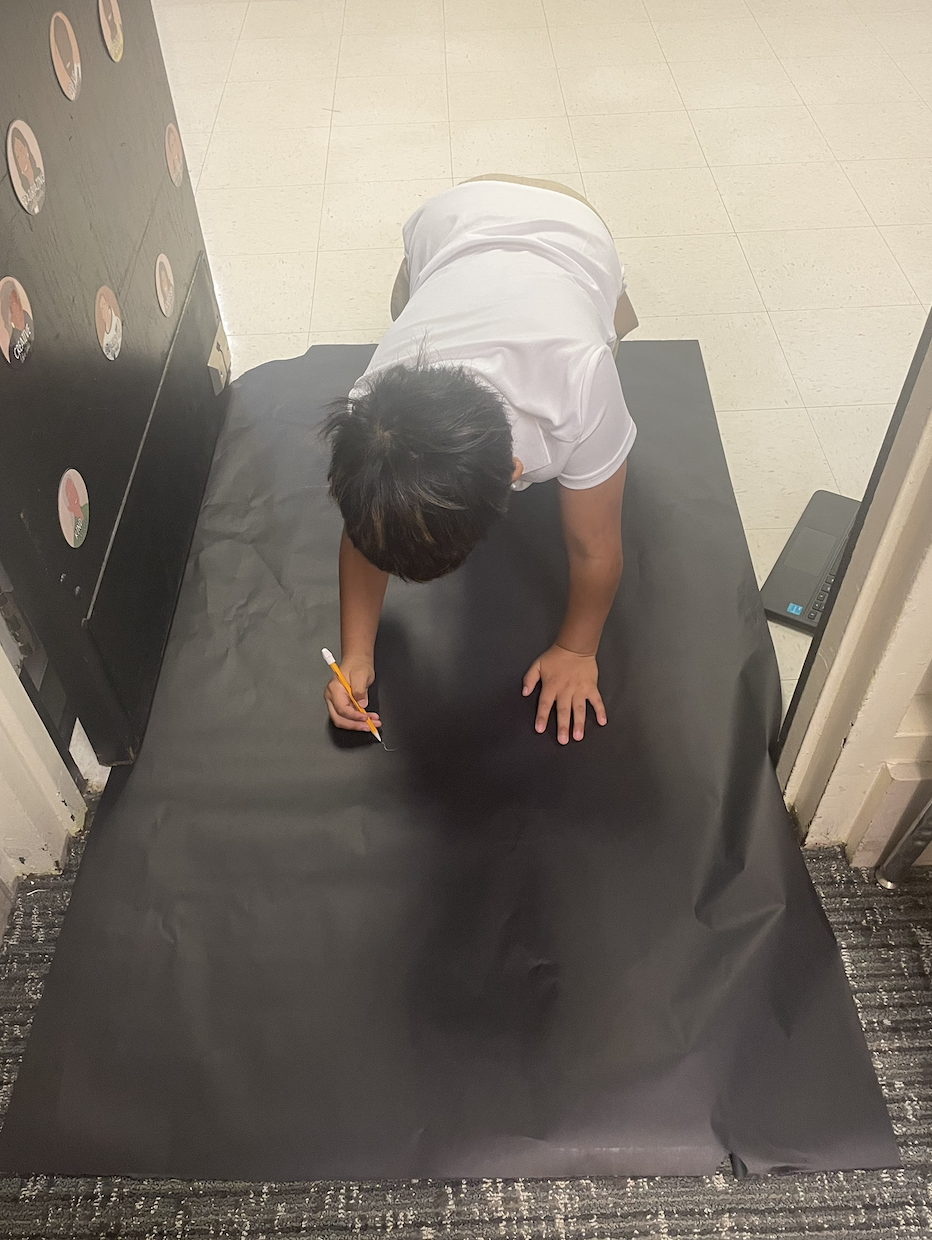
Third grade country reports involve students researching a country's geography, flag, food, landmarks, and culture using books and kid-friendly websites, then tracing and painting a giant version of that country's outline on butcher paper—carefully labeling cities, rivers, mountains, and adding small drawings of local animals or traditions around the edges. We do this because third graders are ready for multi-step research projects, but a written report alone feels abstract; blowing the country up to poster size forces them to think about scale, relative location, and what truly matters enough to include on a public display that the whole school will see.
Vocabulary
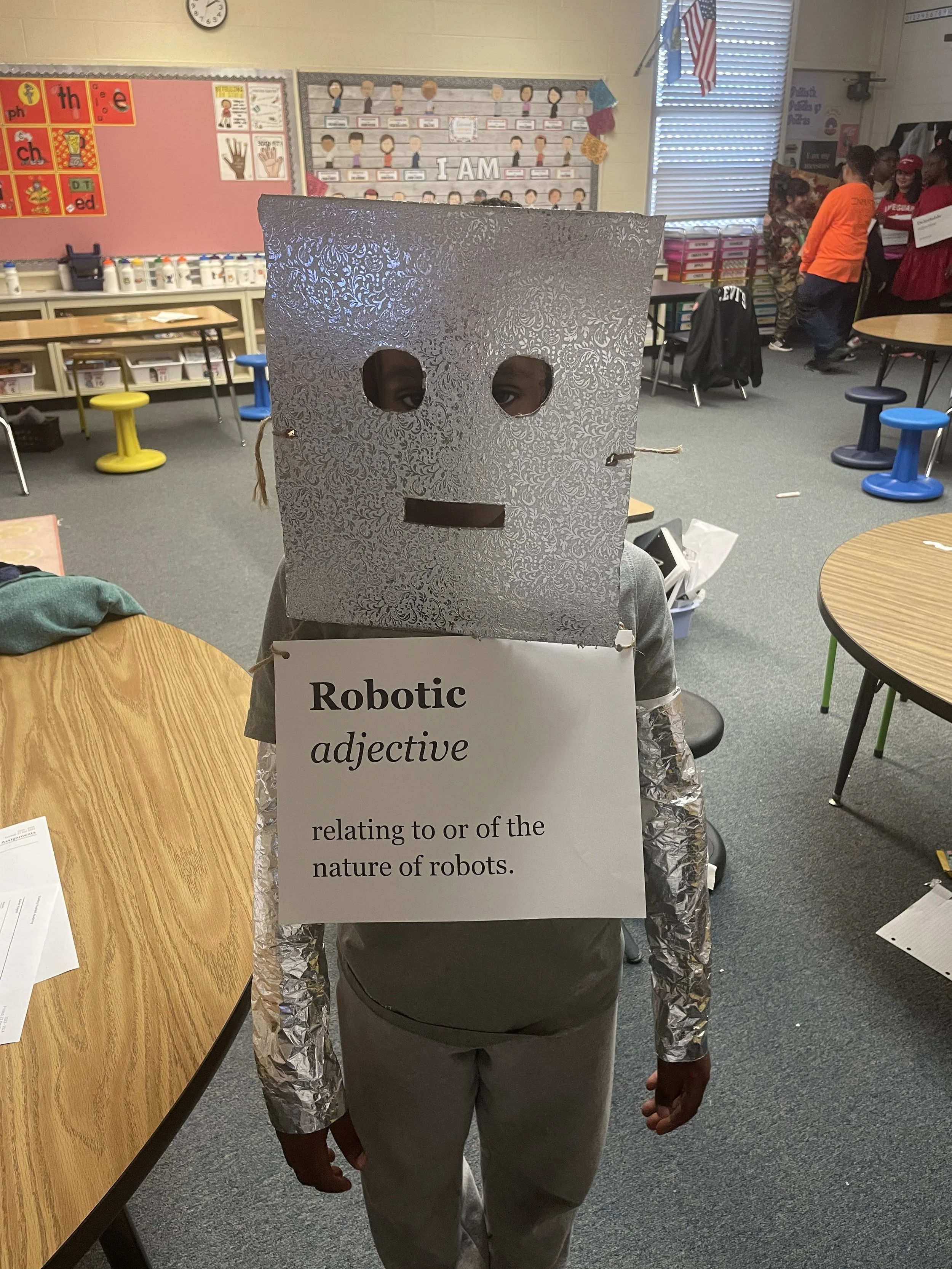
A vocabulary parade in third grade is a celebration where each child chooses a new or interesting word—like "enormous," "mischievous," or "dazzling"—designs a costume or wearable sign that illustrates its meaning, then parades through the school while classmates guess the word based on the visual clues. We do this because third graders are building reading comprehension and word awareness, and a parade turns abstract vocabulary into something physical, theatrical, and unforgettable—kids remember "revolve" because someone walked in a circle wearing a cardboard sun hat, not because they wrote it five times.
Museums
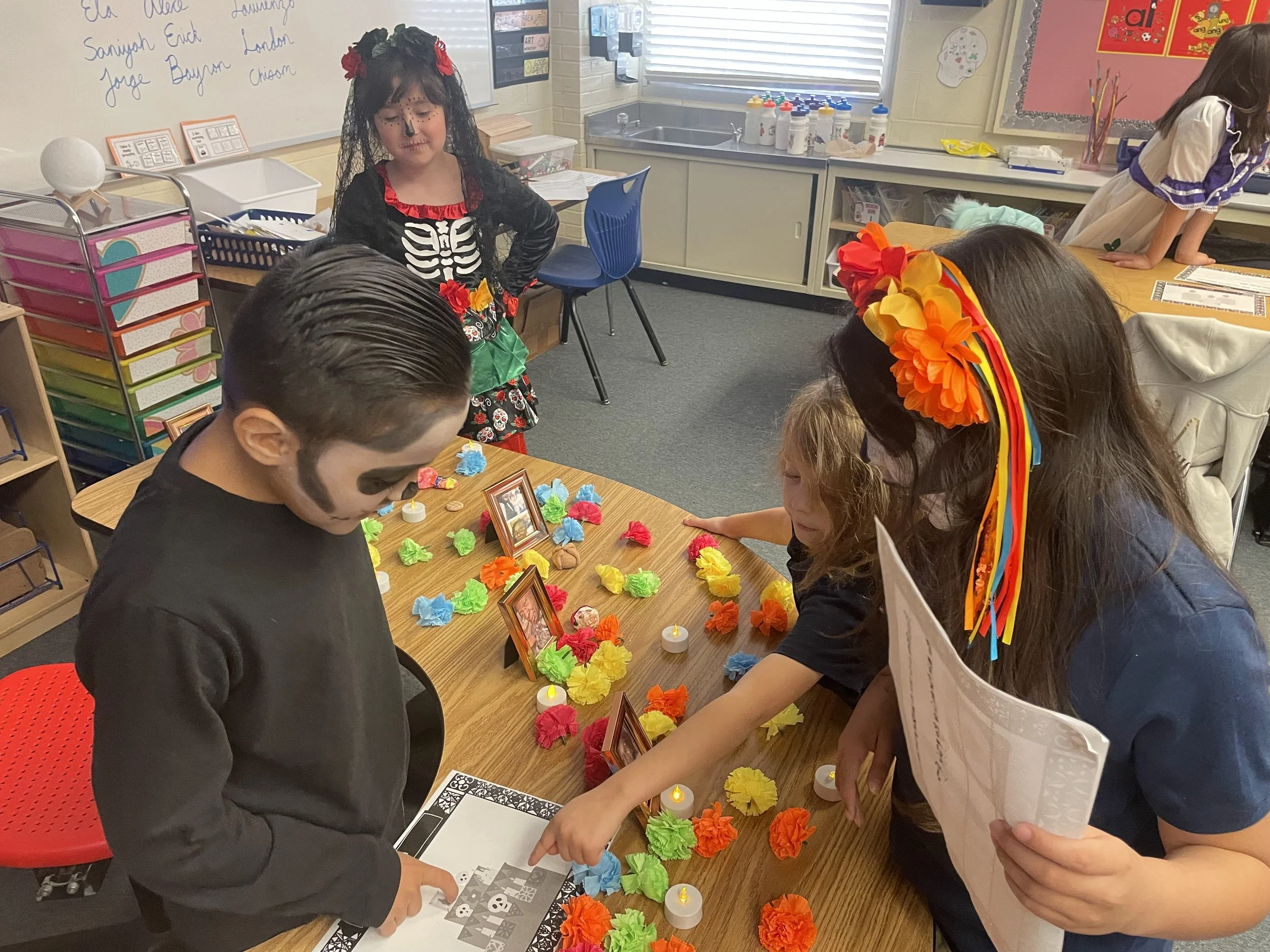
Third-grade students research, design, and lead a Día de los Muertos museum and a Native American museum, where they become docents—creating displays of altars (ofrendas), marigolds, sugar skulls, and traditional tools or shelters—then explain the meaning behind each symbol to visiting classes, teachers, and families with confidence and cultural respect. We do this because third graders are ready to move beyond consuming information to teaching others; researching a holiday or tribal tradition and then standing beside a display to answer "Why do they use marigolds?" or "What was a tipi used for?" builds deep knowledge, public speaking skills, and genuine cultural understanding that no quiz could ever match.
Habitats
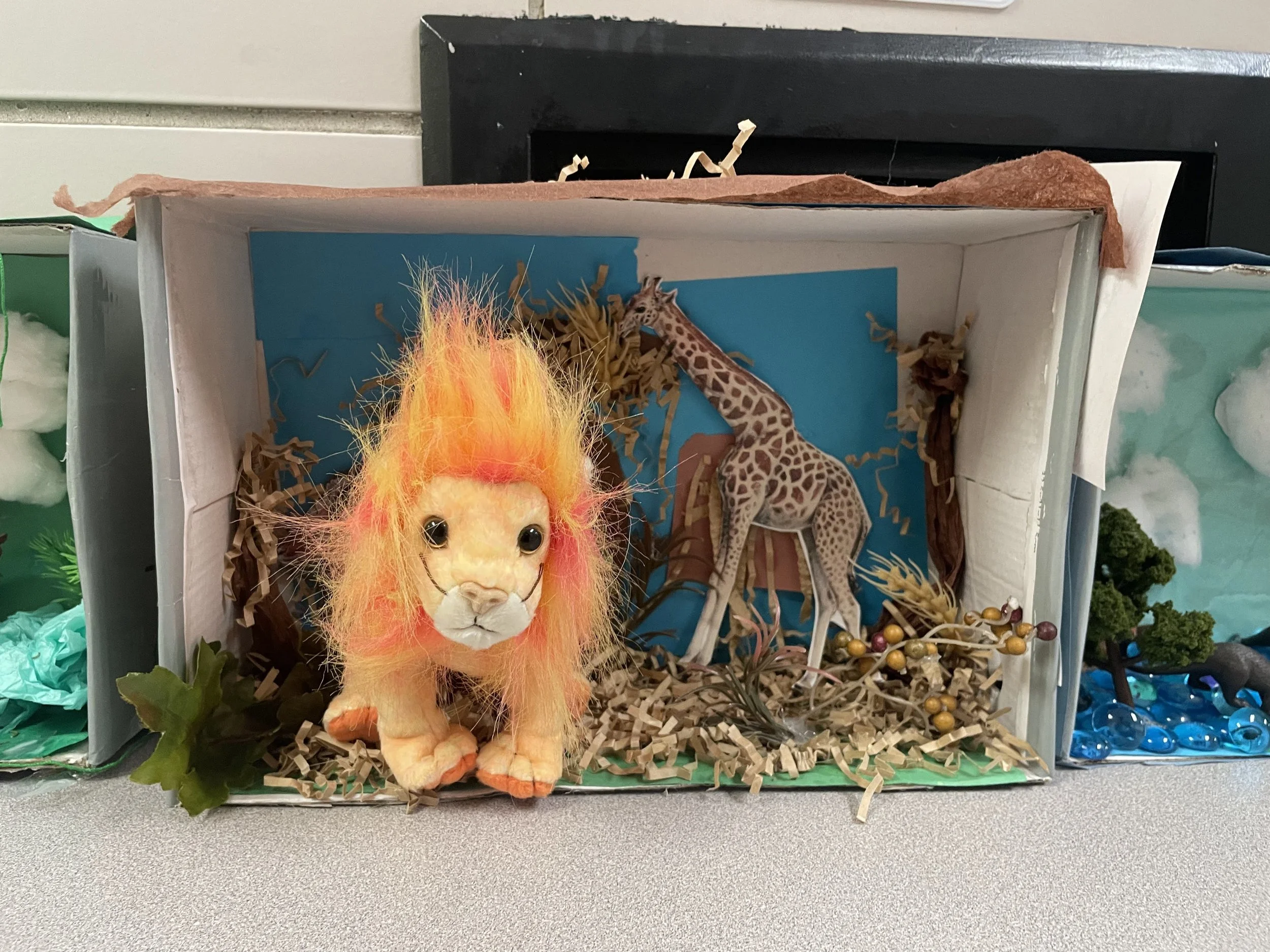
Third-grade building shoebox habitats is a hands-on project where students transform cardboard boxes into miniature ecosystems—complete with painted backgrounds, clay animals, paper plants, and natural materials like twigs and moss—to represent a specific environment like the rainforest, desert, ocean, or arctic tundra. We do this because third graders are learning about animal adaptations, food chains, and the relationship between living things and their environment, and a shoebox habitat forces them to make real design choices: "What would a cactus need to survive here? How do I show camouflage? Where does the water go?"
Fossils
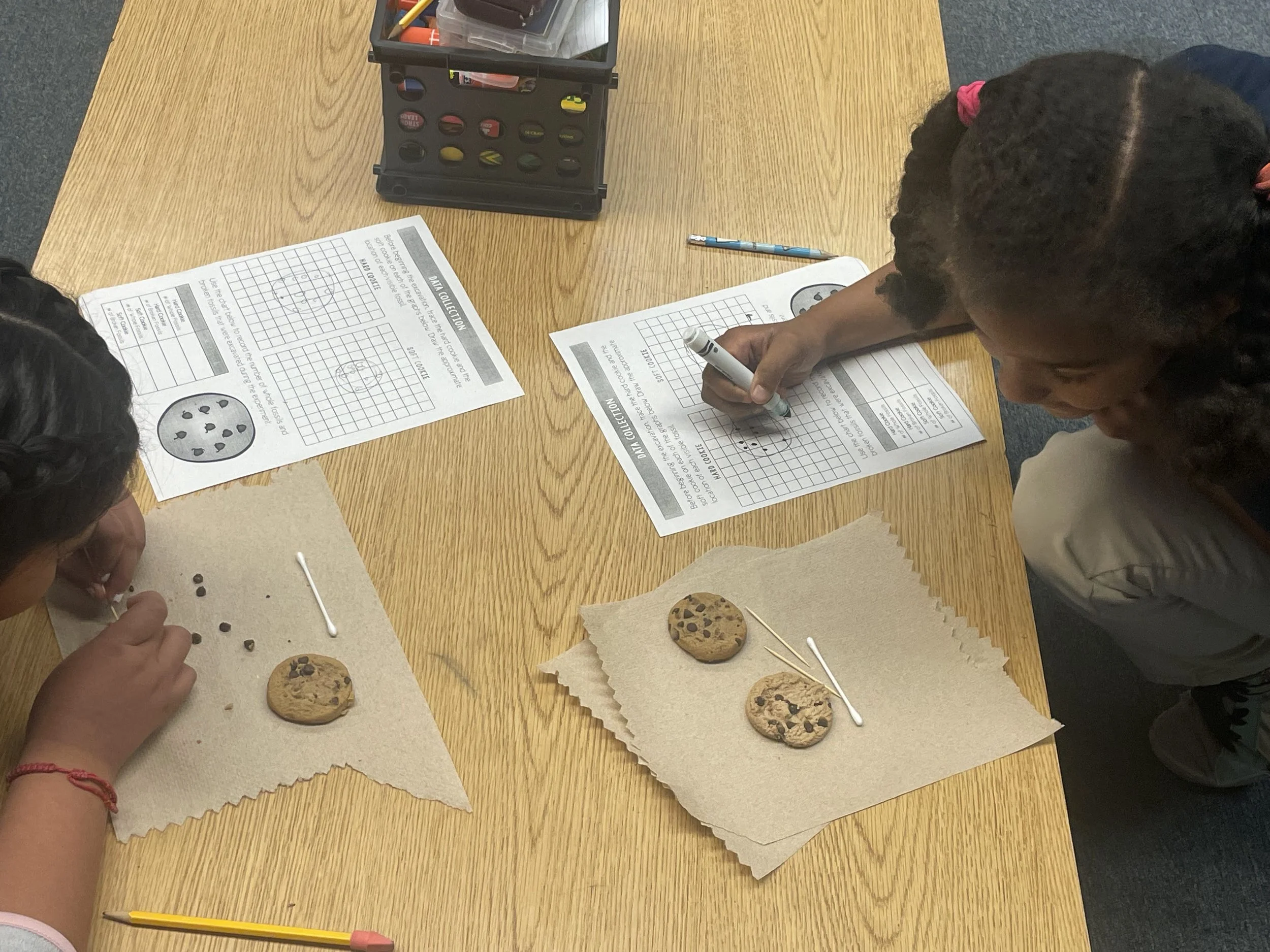
A third grade fossil cookie dig is a hands-on science activity where students carefully excavate "fossils" (chocolate chips, candies, or small shell-shaped sprinkles) from a chocolate chip cookie using toothpicks and small brushes—simulating the patience and precision real paleontologists use when uncovering fossils from sedimentary rock. We do this because third graders are learning about fossils, extinction, and how scientists study life from millions of years ago, and pretending to be paleontologists for an afternoon teaches them that real science is slow, careful, and full of "aha!" moments when a tiny chip finally pops free without breaking.
The Great Wave
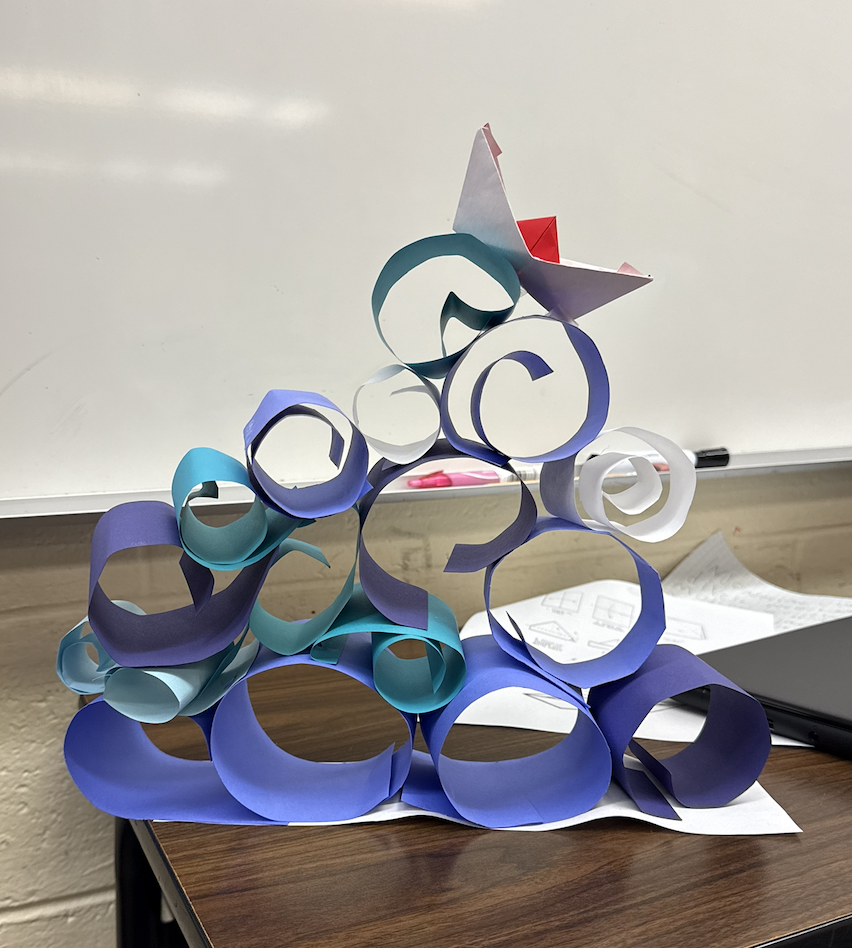
Third-grade art exploration introduces students to famous artworks and artists from around the world to build global awareness and visual schema—then invites them to create their own interpretations, like building a layered 3D paper sculpture of Hokusai's The Great Wave off Kanagawa for AAPI Month or emulating Jean-Michel Basquiat's bold lines, crowns, and scribbly energy to paint dinosaurs that feel both ancient and brand new. We do this because third graders are ready to understand that art carries history, identity, and emotion; when a child cuts and curls blue paper to make her own towering wave or draws a bright pink T. rex with a crooked crown, she's not just making a project—she's building a mental library of visual culture that will help her recognize, respect, and reference artists her whole life.
Totem Poles
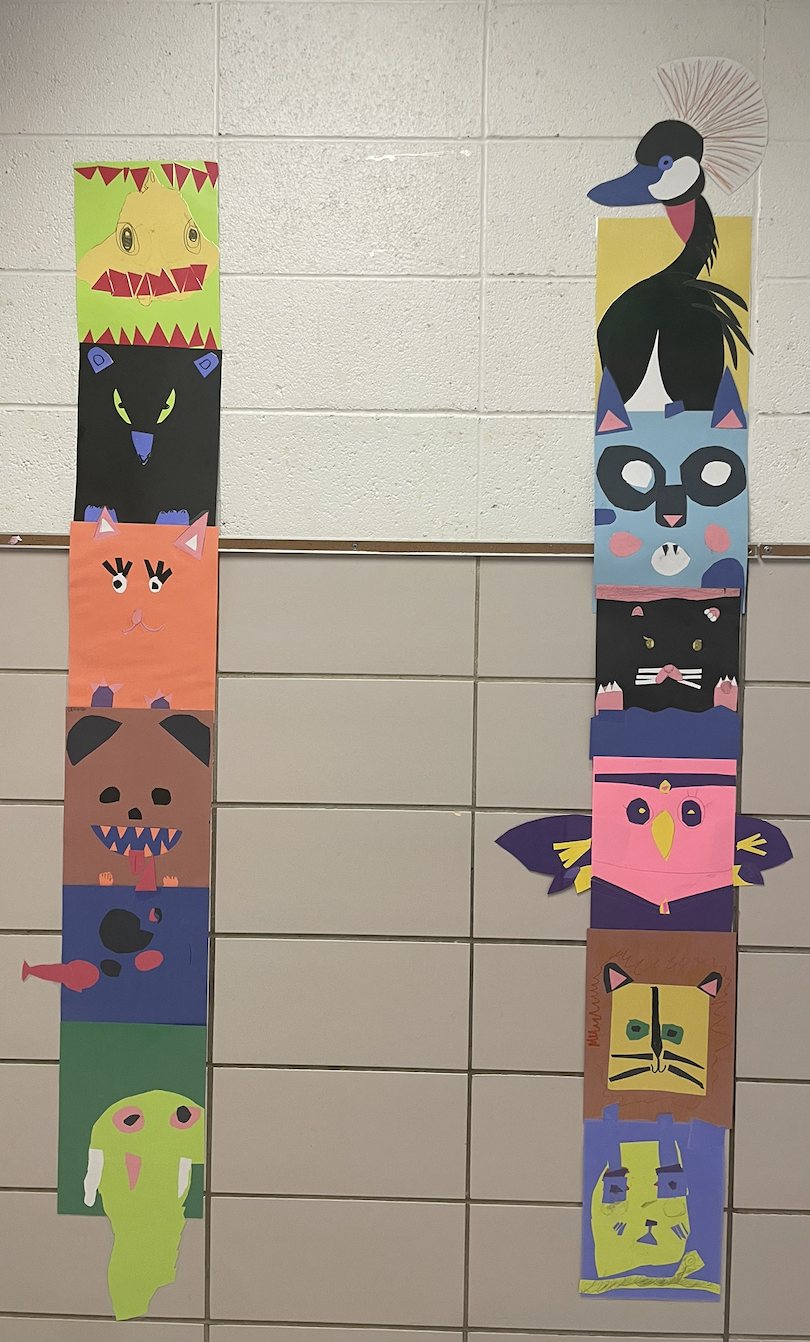
Creating paper totem animals in third grade is a Native American art exploration where each student chooses a single animal—bear for strength, eagle for vision, wolf for loyalty, beaver for determination, or raven for creativity—and builds a bold construction paper version of that creature to represent their own personality, strengths, or hopes for the school year. We do this with deep respect for the Indigenous peoples of the Pacific Northwest (such as the Haida, Tlingit, and Kwakwaka'wakw), explaining that totem poles traditionally tell family stories through stacked animal figures, and that each child's single animal serves as a personal symbol—honoring the tradition while helping third graders think about what qualities they see in themselves.